
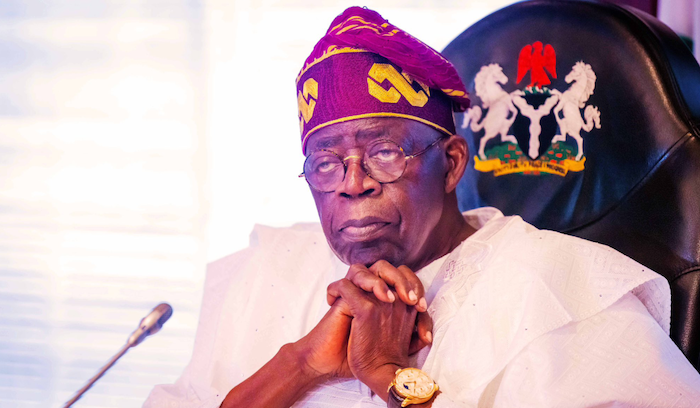

Daniel Bwala, Special Adviser to President Bola Tinubu on Policy Communication, has dismissed allegations that the President is promoting a one-party state in Nigeria, accusing opposition leaders of deflecting blame for their internal crises.
This comes in response to criticisms from the Peoples Democratic Party (PDP), which accused the President of orchestrating instability within opposition parties following recent high-profile defections.
Two governors and several cabinet members have recently left the PDP for the ruling All Progressives Congress (APC).
In his Democracy Day address, President Tinubu rejected claims that his administration was undermining Nigeria’s multi-party democracy, affirming his commitment to pluralism.
Speaking in an interview on Arise Television, Bwala reinforced the President’s position, arguing that the current disarray within the PDP predates Tinubu’s presidency and is self-inflicted.
“When the PDP was in power, President Tinubu’s party was reduced to governing just one state.
He didn’t complain or accuse anyone—he rebuilt it from the ground up,” Bwala said.
Describing the PDP as a “sinking ship without leadership,” Bwala argued that the President should not be faulted for receiving defectors into the APC, noting that all politicians have a constitutional right to freedom of association.
“Nigeria remains a multi-party state. It’s just that only one strong party currently exists, while the others have become weak—through no fault of the President.
The PDP’s problems began long before Tinubu emerged as the APC’s presidential candidate,” he said.
Bwala further justified the influx of defectors into the APC, insisting that the President cannot be expected to reject new members simply to preserve opposition stability.
“When the President said he welcomes those jumping ship, it wasn’t out of malice—it was political realism. He is a party man, and there’s nothing undemocratic about that,” he added.
Bwala maintained that the opposition’s collapse is the result of internal mismanagement, not government interference, and called on opposition leaders to take responsibility rather than shift blame.