
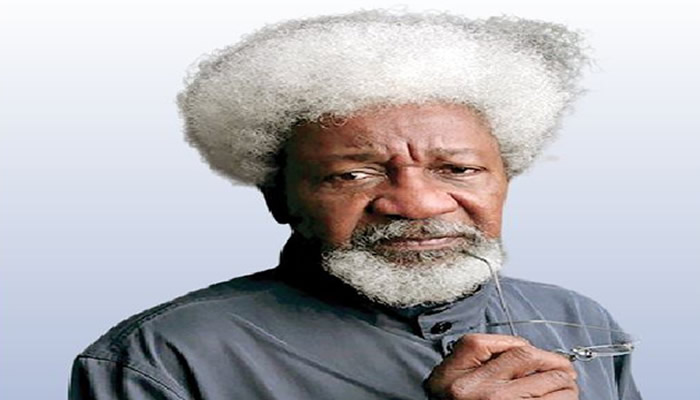

Nobel laureate Prof. Wole Soyinka has revealed that he once considered entering Nigeria’s presidential race following the June 12 pro-democracy struggle but abandoned the idea after 36 hours of reflection, calling the notion “crazy.”
Soyinka made the disclosure during a media interaction at Freedom Park, Lagos, on Saturday, during an event titled “June 12: Romancing the Embers.” The engagement followed President Bola Tinubu’s recent conferment of national honours on individuals recognized as heroes of the June 12 movement.
Responding to a question about why he did not seek political office after the annulled 1993 election, Soyinka explained that although he briefly entertained the idea, he ultimately rejected it.
“I did not; I was not interested,” he said. “I wanted to go back to my writing, to where I belong. I am not a politician.
I must confess, however, that for about 36 hours, I decided that we have a responsibility and I nearly accepted the nomination to run for President. Then I said, ‘Wole Soyinka, you dey craze.’ So I returned to what I love doing.”
The playwright criticized those who, in his view, downplay the significance of the June 12 movement, calling them enemies of democracy.
He noted that many participants in the movement had different motivations—some seeking justice, others personal vindication—but insisted that its core ideals must not be distorted.
He acknowledged that the struggle was marked by betrayal, inconsistencies, and opportunism, and warned against attempts to revise or politicize its legacy. “People now assume different roles, pretending and using the transition period. June 12 did not begin on June 12 and did not end on June 12.
Many who now invoke it to settle political scores or justify failed ambitions are trivializing it. They are the worst enemies of democracy.”
Soyinka urged the continued preservation of the movement’s memory through public remembrance and formal recognition of those who paid the price for democracy.
He said the recent honours list was not exhaustive but noted that those recognized should be seen as representatives of a wider national effort. “I listened to Kayode Fayemi. There were indeed some misses in the honours list.
But this was a broad, multi-dimensional struggle involving many sectors—from the military to academia, market women, and factory workers.”
He also criticized some Nigerian youths who dismiss the relevance of June 12, describing such attitudes as ignorant and irresponsible. “Over half of Nigerians were not born as of June 12, 1993.
They should either choose to learn or remain silent if they don’t know. When we were young, we were curious. We didn’t dismiss the past.”
Soyinka attributed widespread ignorance of national struggles to the government’s removal of history from school curricula.
He described the policy as a “crime against youth and education” and called for increased access to historical materials. “Even fiction can spark interest.
But to blab without knowledge is irresponsible,” he said. “The youth have a responsibility to ask questions, to be curious, and to learn.”