

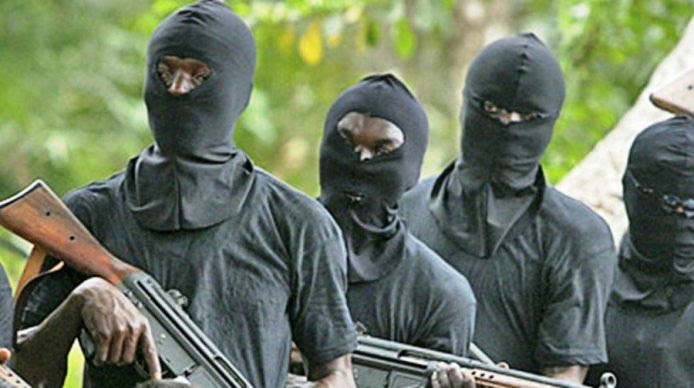


One of the six Nigerian Law School students recently kidnapped along the Zakibiam-Mukari Expressway in Benue State has revealed chilling details of their abduction, insisting that contrary to police claims, the victims were not rescued by security forces but released after ransom was paid.
The student, David Obiora, currently at the Yola campus of the Nigerian Law School, disclosed in an exclusive WhatsApp interview with Vanguard that the kidnappers were of Tiv origin and operated from within their local community.
Obiora was abducted alongside five other law students and additional passengers while en route to Yola from Onitsha on July 26, 2025. According to him, the group was travelling in a company bus when they were ambushed around 9 p.m. near Jootar, a town situated between Zakibiam and Mukari.
“There were six of us law students in the vehicle, along with the driver, three passengers heading to Cameroon, and a woman from Anambra State going on vacation,” he said.
Obiora recounted that about ten armed men—four wielding AK-47 rifles and others armed with machetes and daggers—forced them into a remote forest roughly 20 kilometres from the highway. “The bus got stuck deep in the bush. They then called for reinforcements, and more men arrived on motorcycles,” he said.
He noted that the group was later joined by four earlier abducted victims, including a non-academic staff member of Federal University Wukari, a corps member named Dauda Wisdom, a pastor recovering from surgery, and another unidentified man. All were held for six days until a ransom of ₦10 million was paid for each hostage.
Obiora firmly denied police reports of a rescue. “Let the record be clear: the Nigeria Police did not rescue us. The Law School did not rescue us.
The Council of Legal Education did not rescue us. We were released after our families and friends paid the ransom,” he stated.
He further revealed that their captors communicated mostly in Tiv, with one or two silent Fulani collaborators. “Their leader, known as Matthew, is either a dismissed soldier or a deserter. The entire group spoke Tiv. They are from that community. It seemed the whole area had been subdued. No one dares to challenge them,” he said.
Disturbingly, Obiora described scenes of young children playing with rifles while the hostages were in captivity. “Children as young as two or three played with guns. The bandits cocked rifles in front of them like it was normal.
Their wives cooked our food and fetched water—muddy water—for us.”
He also recounted a conversation with one of the captors named David, who claimed he had been involved in kidnapping for nine years. “He said he bought cars for his wife and sends his kids to school. Yet, he can’t live in his own house because he is on the run,” Obiora said.
Their leader, Matthew, allegedly claimed to possess spiritual protection from a “juju man” in Kano, boasting that the army could not kill him unless it was destined by God.
Obiora admitted that he initially assumed they were abducted by Fulani gunmen, but soon realised otherwise from their language and appearance. “It was my first experience. I was terrified. But they assured us they wouldn’t kill.
The earlier abductees had been there for 22 days and said they don’t kill. That calmed my fears,” he said.
He added that conditions were harsh. “We ate once a day and drank water so muddy you wouldn’t wash a car with it. The same food the kidnappers ate was what we ate.”
Following their release, the victims reportedly trekked for several hours through dense bush paths, crossing from Benue into Taraba State.
They eventually arrived at a restaurant near a motor park, where they rested and later received assistance from a transport company official, who helped them continue their journey to Yola.


