
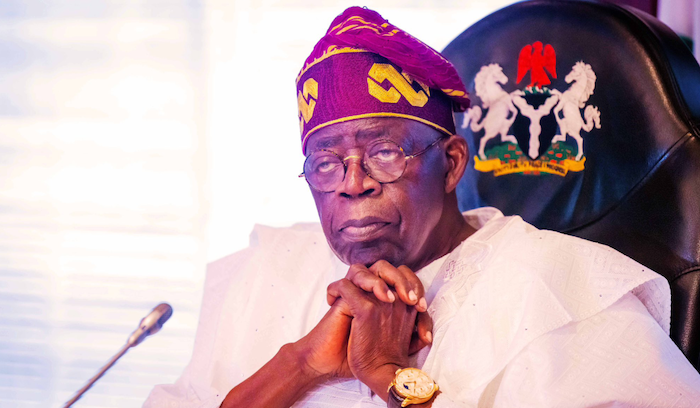

Vice President Kashim Shettima on Tuesday disclosed that some individuals from Borno State once warned President Bola Tinubu against wearing traditional outfits he gave him during the 2023 election campaign, alleging the clothes were spiritually manipulated to influence him.
Shettima, however, said Tinubu dismissed the allegations and deliberately wore the outfits continuously for one week to prove he was unfazed by the claims.
The Vice President made the revelation in Abuja during the public presentation of former Head of State Gen. Yakubu Gowon’s autobiography titled My Life of Duty and Allegiance, where he represented the President.
According to Shettima, the incident reflected the growing level of suspicion and distrust in Nigeria’s political environment.
Drawing a comparison with the past, the Vice President recalled how the Sultan of Sokoto once narrated that his family regularly sent gallons of fura to Gowon at Dodan Barracks in Lagos during his time as Head of State.
He said Gowon accepted the gesture without fear or suspicion, describing it as a reflection of the trust that once existed among Nigerians.
“Sheikh narrated how gallons of fura were sent to General Gowon weekly at Dodan Barracks, and he accepted them willingly because there was trust and confidence,” Shettima said.
“But today, suspicion has crept into our relationships, and it should not be so because we are one people bound by a common destiny.”
Recounting his personal experience with Tinubu, Shettima explained that during the build-up to the 2023 presidential election, he sourced Borno traditional attire and caps for Tinubu as the then-presidential aspirant toured northern states seeking support.
He noted that the President frequently wore the attire during campaigns after his aides confirmed that the outfits suited him well.
However, Shettima said the controversy emerged shortly after the administration assumed office.
The Vice President recalled that after returning from Beijing, China, where he represented Tinubu at the Belt and Road Initiative conference in October 2023, the President summoned him over the matter.
“When I returned from China, the President asked me to sit down and said some people from my place came to him and advised him to stop wearing the dresses I gave him,” Shettima stated.
“They claimed he had been charmed and that he would die, leaving me to become President.”
He said Tinubu immediately dismissed the allegation, insisting the claim made no sense because, at the time the clothes were given to him, both of them were still presidential aspirants and not yet candidates.
“Their story did not add up because when you gave me the dresses, you were not even the vice-presidential candidate and I was not yet the party’s candidate,” Shettima quoted Tinubu as saying.
According to him, Tinubu thereafter wore the outfits repeatedly for one week to demonstrate that he was not influenced by superstition or fear.
“For one whole week, he kept wearing those dresses just to show them he was not fetish-minded.
These are some of the strange games that happen within political circles these days,” he added.
Speaking further at the event, Shettima praised Gowon for promoting national unity and reconciliation during and after the civil war.
He highlighted the establishment of the National Youth Service Corps and the formation of the Economic Community of West African States as part of Gowon’s enduring legacies.
Describing Gowon as “the last man standing” among Nigeria’s post-independence military leaders, Shettima said the autobiography serves as a reminder of the need for Nigerians to preserve the values of unity and mutual trust.
He also urged Nigerians to resist divisive tendencies capable of threatening national cohesion.
The event attracted several dignitaries, including former President Goodluck Jonathan, Senate President Godswill Akpabio, the Sultan of Sokoto Muhammad Sa’ad Abubakar III, and Plateau State Governor Caleb Mutfwang, among others.