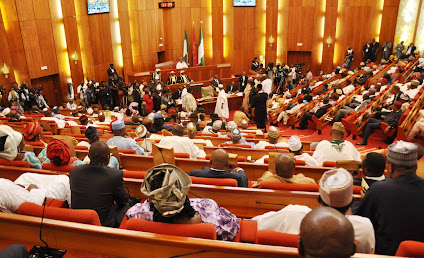


The House of Representatives is considering a new bill that would impose strict penalties—including a seven-year jail term or a fine of at least N5 million—on individuals found guilty of offering or accepting bribes in workplaces across Nigeria.
Sponsored by Paul Nnamchi (Enugu East/Isi-Uzo Federal Constituency) and three other lawmakers, the proposed legislation targets bribery in both public and private sector institutions.
Titled “A Bill for an Act to Provide Effective Deterrence and Consequences for Bribery in Workplaces,” it is scheduled for further debate when the House reconvenes on June 17.
The bill defines workplace bribery as “the offering, giving, receiving, or soliciting of anything of value as an inducement or reward to influence the actions of an employee, officer, or agent.”
It covers government agencies, corporations, NGOs, and other professional environments.
If passed, individuals who offer bribes—whether in the form of cash, gifts, favours, or other benefits—could face a fine of not less than N5 million or three times the value of the bribe, whichever is higher, in addition to a minimum seven-year prison sentence.
Those who solicit or receive bribes would face even harsher penalties, including a 10-year jail term and the same financial sanctions.
For public officials convicted of bribery, the bill recommends immediate dismissal and a 15-year ban from holding any elected or appointed office.
Corporate entities found guilty of workplace bribery could be fined no less than N100 million.
In such cases, directors or responsible officers may be prosecuted and sentenced to a minimum of 10 years in prison if found guilty.
Companies may also lose their operating licences and be barred from public procurement contracts for up to a decade.
To encourage accountability, the bill mandates the establishment of anti-bribery policies and anonymous reporting systems in all workplaces.
It offers protection for whistleblowers and criminalises retaliation against them, imposing a minimum five-year jail term and a N10 million fine on offenders.
Employers who fail to report bribery within their organisations risk a fine of at least N20 million and/or five years’ imprisonment.
The bill also proposes the creation of a Workplace Anti-Bribery Unit within the Economic and Financial Crimes Commission (EFCC), which would be responsible for investigating cases, prosecuting offenders, and monitoring compliance.
Any assets or funds linked to bribery would be forfeited to the Federal Government and redirected toward anti-corruption and economic development initiatives.
The Minister of Justice and Attorney General of the Federation is expected to collaborate with the EFCC to issue regulations for the effective implementation of the law if it is passed.