
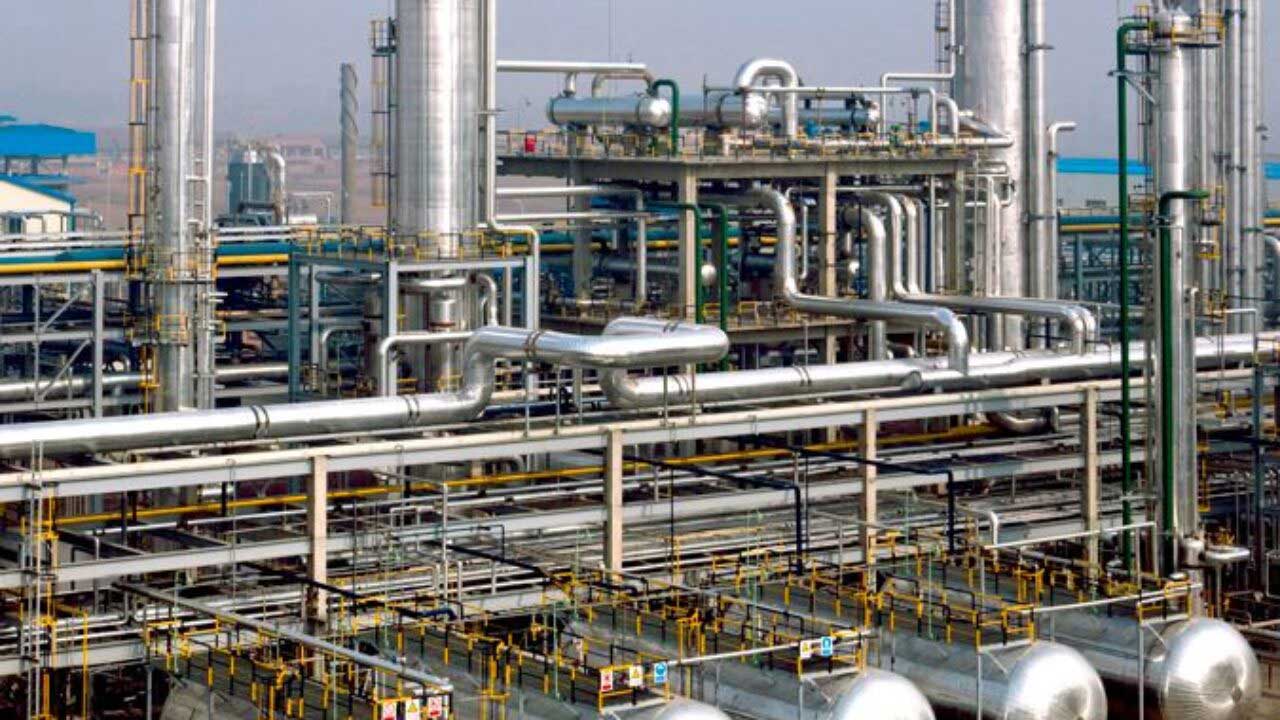

The Port Harcourt Refining Company remains inactive two months after being shut down for maintenance, with no clear date for resumption of operations.
The Nigerian National Petroleum Company Limited (NNPCL) had announced on May 24 that the refinery was undergoing routine maintenance, a statement issued by its then Chief Corporate Communications Officer, Olufemi Soneye. However, more than 30 days later, the plant has yet to restart fuel production.
Petroleum marketers say repair work is still ongoing.
Meanwhile, NNPCL has not appointed a new spokesperson, and efforts by journalists to reach the company through its listed contact details have been unsuccessful.
The delay comes amid a corruption investigation by the Economic and Financial Crimes Commission (EFCC) into the funds allocated for the rehabilitation of Nigeria’s refineries.
A former Chief Financial Officer of the NNPC, Umar Isa, was arrested on Monday over an alleged $7.2 billion fraud linked to the Port Harcourt, Kaduna, and Warri refineries.
The EFCC is probing the disbursement of $1.5 billion for Port Harcourt, $740 million for Kaduna, and $657 million for Warri.
A source within the agency confirmed that Isa is being investigated for corruption, abuse of office, and diversion of public funds.
Other officials reportedly under investigation include Tunde Bakare (Managing Director, Warri Refinery), and two former MDs of the Port Harcourt Refinery—Ahmed Adamu Dikko and Ibrahim Monday Onoja.
The former MD of the Warri refinery is also said to be in EFCC custody.
The Port Harcourt refinery, which was declared operational in November 2024 by then NNPC boss Mele Kyari, had previously undergone a long-awaited revamp.
At the time, NNPCL announced that the 60,000-barrel-per-day facility had resumed production at 70% capacity, with outputs expected to include diesel (1.5 million litres/day), pour fuel oil (2.1 million litres/day), and petrol blended from straight-run gasoline (1.4 million litres/day). Over 200 trucks of petrol were expected to be released daily.
However, just six months after this declaration, the refinery was closed again for what was described as a one-month maintenance period—now extended indefinitely without official explanation.
Similarly, the Warri refinery, declared operational in December 2024, shut down within a month and has remained idle.
An April 2025 performance report from NNPCL stated that the status of all three refineries—Port Harcourt, Warri, and Kaduna—is “under review.”
The Petroleum Products Retail Outlet Owners Association of Nigeria (PETROAN) has expressed skepticism over the maintenance process.
The group argues that the refinery will not be fully functional without the inclusion of a Premium Motor Spirit (PMS) blending unit, and said 30 days is insufficient for thorough repairs.
Amid growing frustration over repeated shutdowns and questionable spending—reportedly around $2.4 billion combined—calls for the privatisation of government-owned refineries have intensified.
Industry stakeholders from the Organised Private Sector and petroleum marketing groups are pushing for immediate reforms.
The Port Harcourt refinery, operational since 1965, suffered years of inactivity until it was hastily reopened in late 2024 following several postponements. Mele Kyari had promised to reopen the Kaduna and new Port Harcourt refineries, but those plans stalled following his departure, ordered by President Bola Tinubu.
Meanwhile, tensions flared on Tuesday as independent fuel marketers protested the rising price of diesel at the refinery.
Members of the Independent Petroleum Marketers Association of Nigeria (IPMAN) decried the sharp price hike—from ₦930 to ₦1,130 per litre in one week—demanding either supply based on their previous payments or a refund.
“NNPCL/Oando raised the diesel price twice in a week—this is unacceptable,” one marketer said. Another added, “You must honour the ₦980 per litre rate.
We cannot keep absorbing these arbitrary changes.”
Refinery officials have called for calm and assured the protesters that the matter has been escalated to NNPCL headquarters in Abuja.