
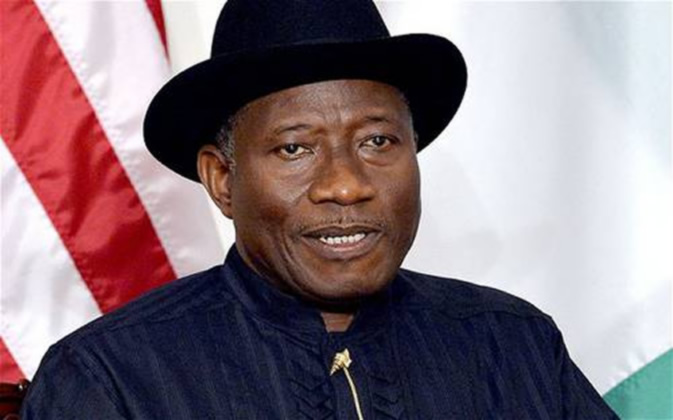

Former President Goodluck Jonathan has pushed back against criticism from ex-Vice President Atiku Abubakar, insisting that he gave his best while in office despite acknowledging that mistakes were inevitable.
Jonathan’s response followed Atiku’s recent remarks during a television interview where he described the former president as inexperienced and faulted his handling of national challenges while in power.
Speaking on Monday in Abuja at an event organised by the Association of Retired Career Ambassadors of Nigeria, Jonathan dismissed the criticism, arguing that no leader governs without errors.
He said, “If I made mistakes, yes, nobody who becomes a governor or president will say they didn’t make mistakes,” adding that leadership is a human endeavour that cannot be divorced from imperfections.
The former president also questioned the narrative that he was too young to lead, noting that he assumed office at 53 and exited at 58.
“Must it have been at 100 years before I could run the affairs of the country?” he asked, defending his record in office.
Jonathan further highlighted what he described as key diplomatic strides under his administration, including Nigeria’s election into the United Nations Security Council, maintaining that such achievements reflected strategic leadership rather than inexperience.
Atiku, who is seeking the presidential ticket of the African Democratic Congress ahead of the next election cycle, had in the interview downplayed the political strength of other contenders, including Peter Obi, Rotimi Amaechi, and Rabiu Kwankwaso, while also expressing dissatisfaction with the current administration of President Bola Tinubu.
Beyond the political exchange, Jonathan raised concerns over instability in West Africa, warning that economic progress would remain elusive without strong democratic systems.
He stressed that while the vision behind the Economic Community of West African States was commendable, persistent political crises in member states had continued to undermine regional growth.
“We cannot progress economically if our societies are politically unstable,” he said, urging leaders across the sub-region to strengthen cooperation and uphold democratic norms.
The former leader also called for better documentation of Nigeria’s foreign policy history to guide future administrations, while paying tribute to the founding fathers of ECOWAS for their foresight in establishing the bloc.
Also speaking at the event, former Head of State Yakubu Gowon reflected on the formation of ECOWAS in 1975, describing it as a collective effort driven by regional cooperation in the aftermath of Nigeria’s civil war.
The event also featured remarks by the President of the Association, Joe Keshi, who emphasised the importance of diplomacy in sustaining peace and fostering international partnerships.