
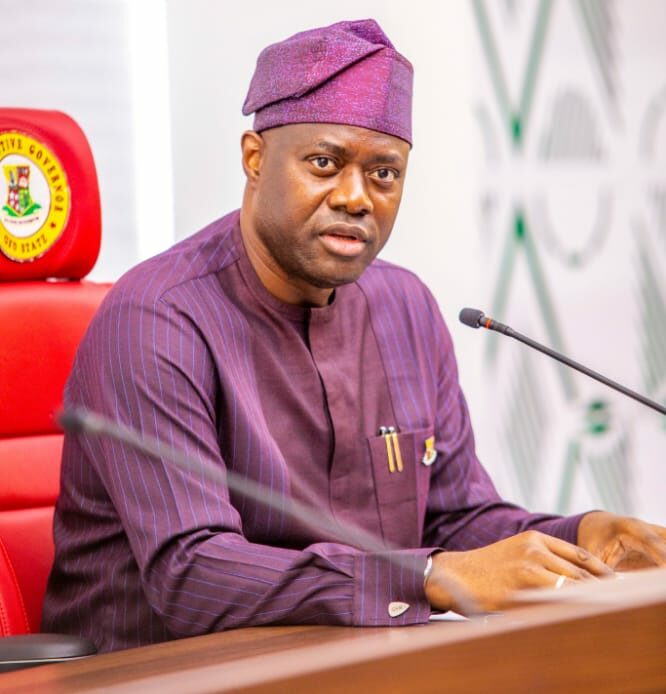

Oyo State Governor, Seyi Makinde, on Friday signed an executive order imposing restrictions on the movement of commercial motorcycles across the state as part of efforts to tackle rising security concerns and strengthen law enforcement.
The directive, known as Executive Order No. 002 of 2026, bars commercial motorcycle operators, popularly called okada riders, from operating between 10:30 p.m. and 5:30 a.m. statewide.
The development comes amid growing concern over insecurity in parts of Oyo State, including the continued captivity of teachers and pupils abducted from schools in Oriire Local Government Area more than 20 days ago.
Speaking during the signing ceremony at the Governor’s Office in Ibadan, Makinde said the order was aimed at reinforcing compliance with vehicle registration laws and traffic regulations while enhancing public safety.
According to him, the increasing use of unregistered vehicles, motorcycles and tricycles in criminal activities has posed significant challenges to security agencies, particularly in tracking suspects and conducting investigations.
The governor explained that the order provides legal backing for stricter enforcement of registration requirements and traffic regulations, including sanctions against motorists who violate traffic rules such as driving against the flow of traffic.
He stated that authorised enforcement agencies have been empowered to arrest offenders and impound vehicles, motorcycles and tricycles found to be operating in breach of the directive.
Makinde added that offenders would face prosecution in accordance with existing laws, while seized vehicles and other assets would be handled through due legal processes.
The governor linked the latest measures to recent security challenges in the state, particularly the abduction of schoolchildren and teachers in Oriire Local Government Area.
“We are living through very trying times. For over 20 days, our teachers and pupils have remained in captivity in the hands of terrorists. Our thoughts and prayers remain with them and their families who continue to endure unimaginable pain and uncertainty,” he said.
He assured residents that the state government remained committed to securing the release of the abducted victims, stressing that efforts to rescue them were ongoing.
Makinde said the government understood the pain and anxiety being experienced by the affected families and communities, adding that the victims had not been abandoned.
Without revealing operational details, he maintained that security agencies were working intensively to secure their freedom and urged residents not to interpret the government’s silence as inactivity.
The governor described the restriction on commercial motorcycle operations as part of broader measures aimed at curbing criminal activities and improving security across the state.
He also urged residents to support security agencies with credible information on suspicious activities and movements.
“Security is a collective responsibility. If you see something, say something, and authorities will do something,” he said, while encouraging residents to utilise the state’s toll-free emergency line, 615, to report security threats and emergencies.
Makinde further called on citizens to remain vigilant and united despite prevailing security challenges, warning against allowing fear to disrupt social cohesion and public confidence.
He commended security operatives and personnel of the Amotekun Corps for their commitment in responding to security threats across the state.
Expressing confidence in the ongoing security efforts, the governor said sustained collaboration among security agencies, communities and residents would not only facilitate the safe return of the abducted teachers and pupils but also strengthen security architecture in Oyo State.
Earlier, the state Attorney-General and Commissioner for Justice, Abiodun Aikomo, said relevant agencies, including the Oyo State Road Traffic Management Authority, the Nigeria Police Force and other law enforcement bodies, would oversee implementation of the executive order.
He added that the agencies would submit periodic enforcement reports to the state government, while the Office of the Director of Public Prosecutions would handle prosecutions arising from violations of the order. Aikomo also assured residents that mechanisms would be put in place to receive complaints against officials involved in the enforcement process.