
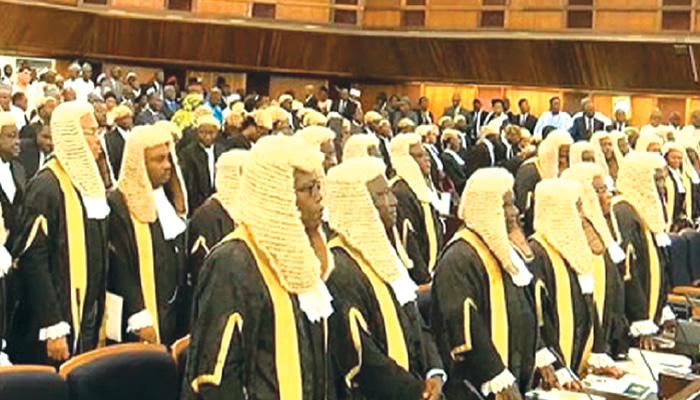

Chief Justice of Nigeria (CJN), Justice Kudirat Kekere-Ekun, has urged judicial officers to embrace artificial intelligence (AI) cautiously, stressing that while technology can improve efficiency in the justice sector, it must never replace human judicial reasoning.
She made this known during a keynote speech at a public lecture organised by the Faculty of Law, University of Lagos, held Wednesday at the Tayo Aderinokun Hall.
The lecture was themed, “Justice in the Digital Age: Leveraging Technology for an Efficient and Accessible Judiciary in Nigeria.”
“AI is fast becoming integral to enhancing efficiency in legal operations and client service delivery,” she said, highlighting the potential of AI-powered tools such as virtual assistants, data analytics, and advanced legal software to improve workflow and decision-making in the legal profession.
Justice Kekere-Ekun acknowledged that although AI use in Nigerian courts is still in its early stages, some private legal tech companies — like Law Pavilion and publishers of the Nigeria Weekly Law Reports — are already advancing digital access to legal materials and precedents.
However, she warned that AI integration in the judiciary must be guided by strong ethical and legal frameworks. “AI is a tool to augment, not replace, judicial wisdom,”
she cautioned. “Ethical oversight, data privacy, and algorithmic bias must be carefully addressed to avoid unintended injustice.”
The CJN emphasized that Nigeria’s digital justice reform requires cross-sector collaboration, policy support, and investment in infrastructure and human capacity.
“Digital transformation of the judiciary will depend on a robust national digital ecosystem and the digital literacy of judges, lawyers, and court staff,” she noted.
She also outlined ongoing digital initiatives in the Nigerian judiciary, including virtual court sittings, e-filing, digital transcription, online case management, and limited use of AI for court operations.
Despite progress, she acknowledged persistent challenges such as poor infrastructure, uneven access to technology across courts, cybersecurity concerns, and legal ambiguities regarding digital processes.
“Infrastructure gaps are a major hindrance.
Many courts still lack stable electricity, internet connectivity, and basic ICT tools. Without targeted investment, the justice gap between regions may continue to widen,” she warned.
The event was attended by key dignitaries, including Lagos State Governor Babajide Sanwo-Olu (represented by Secretary to the State Government, Bimbola Salu-Hundeyin), Pro-Chancellor of UNILAG Chief Wole Olanipekun, Vice-Chancellor Prof. Folasade Ogunsola, and Professor Akin Oyebode, who chaired the lecture.