
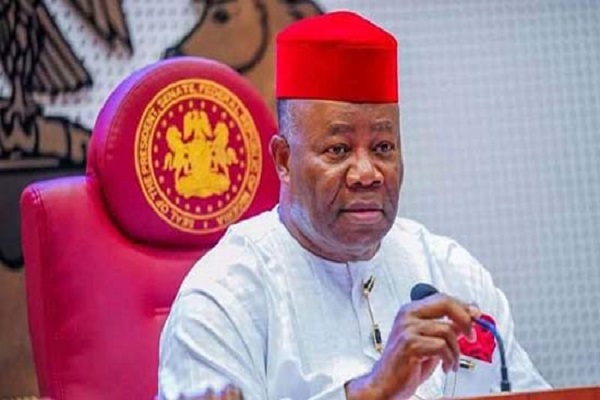

The Senate has amended its Standing Rules in a sweeping move that could block serving governors, former governors and other incoming lawmakers from occupying key leadership positions in the 11th National Assembly.
The decision, taken on Tuesday after a closed-door session lasting about three hours, is widely interpreted as a strategic effort by the red chamber to preserve its internal hierarchy and limit the influence of political heavyweights eyeing top offices ahead of 2027.
By revising Orders 4 and 5, the Senate introduced stricter eligibility conditions for both presiding and principal offices, effectively restricting access to lawmakers with proven legislative experience.
Under the updated Order 4, the emergence of presiding officers such as Senate President and Deputy Senate President will strictly follow a ranking system based on prior legislative roles.
The hierarchy prioritises former Senate Presidents, former Deputy Senate Presidents, ex-principal officers, and senators with at least one full term, before considering former members of the House of Representatives and, lastly, first-time senators.
In a more far-reaching provision, the amended Order 5 bars any senator from contesting principal offices unless they have served two consecutive terms immediately before their nomination.
This condition automatically disqualifies many incoming lawmakers, particularly those who were not part of both the 9th and 10th Assemblies.
Principal offices affected by the new rule include Senate Leader, Deputy Senate Leader, Chief Whip, Minority Leader and other key leadership positions.
The rule changes come amid growing political manoeuvring ahead of the 2027 general elections, with several governors nearing the end of their constitutionally permitted two terms and seeking to transition to the Senate.
No fewer than 10 governors, alongside several former state chief executives, are reportedly positioning to secure senatorial tickets, leveraging their influence within party structures.
Among those expected to leave office by May 29, 2027, are AbdulRahman AbdulRazaq of Kwara, Abdullahi Sule of Nasarawa, Ahmadu Fintiri of Adamawa, Babagana Zulum of Borno, Inuwa Yahaya of Gombe, Mai Mala Buni of Yobe, Babajide Sanwo-Olu of Lagos, and Dapo Abiodun of Ogun.
Others include Oyo State Governor Seyi Makinde and Bauchi State Governor Bala Mohammed.
Although Bayelsa State Governor Douye Diri and Imo State Governor Hope Uzodimma will complete their tenures in 2028 due to off-cycle elections, both have already featured in early political calculations for Senate seats.
In Imo State, the contest for the Imo West senatorial seat has intensified, with the All Progressives Congress endorsing Uzodimma as its consensus candidate. Party leaders in the Orlu zone recently procured a nomination form on his behalf and urged him to accept the ticket.
The move has, however, sparked a rivalry with former governor Rochas Okorocha, who is also seeking a return to the Senate.
The internal contest reflects broader political realignments across the country, as outgoing governors and influential figures reposition themselves to retain relevance at the federal level.
Meanwhile, President Bola Tinubu is said to have resisted moves by National Assembly leaders to secure automatic return tickets, reaffirming the dominance of state governors in determining party nominations.
Analysts say the Senate’s latest rule amendments may significantly alter the power equation in the next Assembly by prioritising institutional experience over political influence.
For ambitious entrants, including governors and former lawmakers, the new framework signals a clear message: leadership of the Senate will be determined not by political stature outside the chamber, but by legislative pedigree within it.