
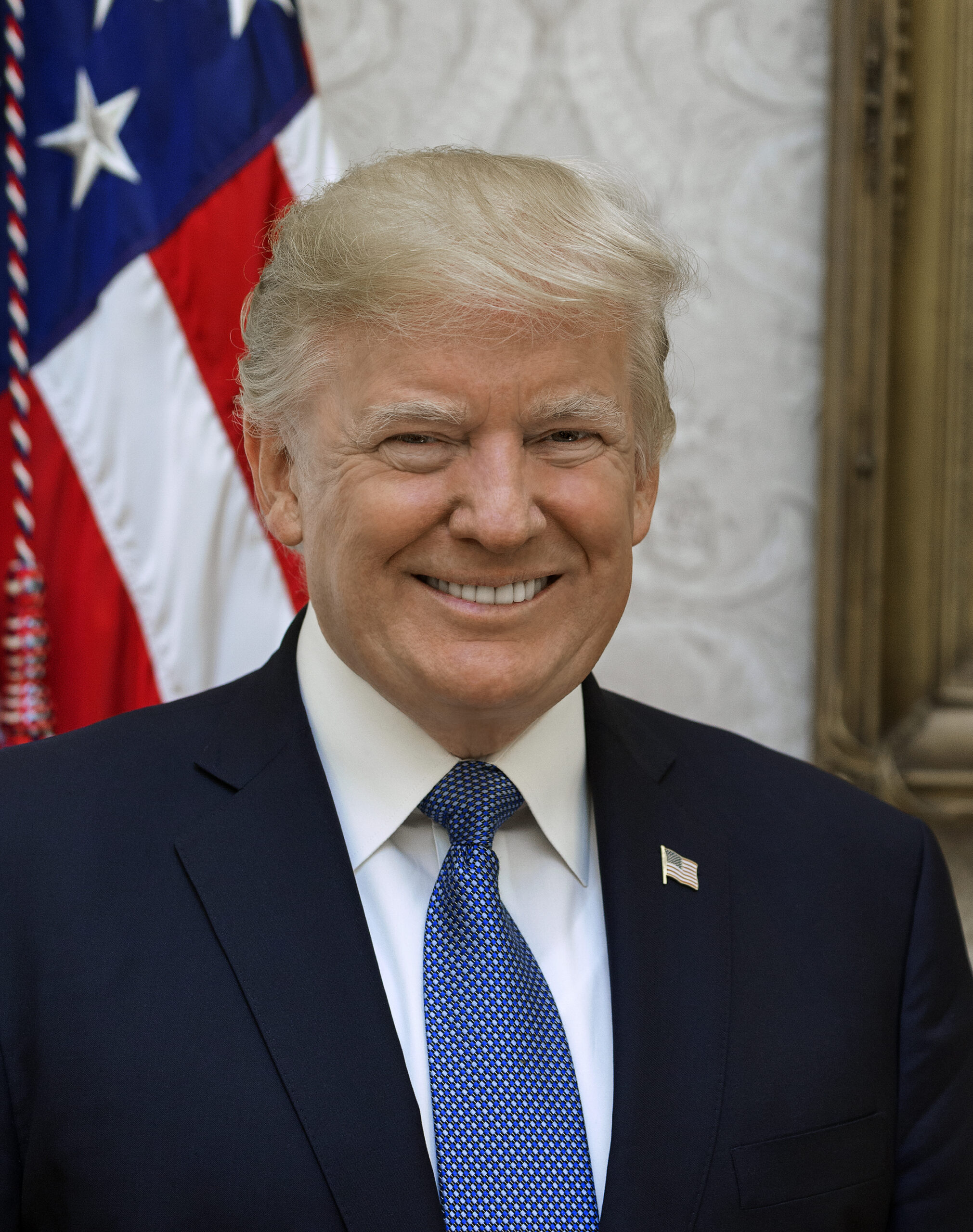

The United States Congress has urged President Donald Trump to pursue a far-reaching bilateral agreement with Nigeria aimed at tackling terrorism, addressing religious violence, and limiting the influence of China and Russia in Africa’s most populous nation.
The call was contained in a joint position by the United States House Committee on Appropriations and the United States House Committee on Foreign Affairs, which was shared on X by Congressman Riley Moore on Tuesday.
In a statement titled “Ending the Persecution of Christians in Nigeria,” the lawmakers applauded Trump for redesignating Nigeria as a Country of Particular Concern, a classification used by the US Department of State for nations accused of severe violations of religious freedom.
Nigeria was first placed on the list in 2020 under Trump but was removed shortly after former President Joe Biden assumed office.
Trump recently announced that Nigeria would again be placed on a religious freedom watchlist, citing concerns over violence against Christian communities.
Earlier in February, Congress recommended visa restrictions and asset freezes against individuals and groups accused of infringing on religious freedom in Nigeria.
Those mentioned included former Kano State Governor, Rabiu Kwankwaso, as well as the Miyetti Allah Cattle Breeders Association of Nigeria and Miyetti Allah Kautal Hore.
According to the committees, Trump directed Moore and Appropriations Committee Chairman Tom Cole to examine what they described as persistent attacks on Nigerian Christians.
Appropriations Vice Chair Mario Díaz-Balart reportedly convened a roundtable and led a congressional delegation to Nigeria, while Foreign Affairs Committee Chairman Brian Mast and Africa Subcommittee Chairman Chris Smith held hearings with government officials and civil society representatives.
The report described Nigeria as one of the most dangerous places in the world for Christians, alleging that armed groups, including terrorist factions and criminal militias, have carried out widespread killings, kidnappings and destruction of churches and schools.
It also criticised the enforcement of blasphemy laws in some northern states, arguing that such provisions have been used to suppress dissent and target minorities.
While acknowledging Nigeria as a strategic partner of the United States, the lawmakers stressed that Abuja must demonstrate stronger political resolve and commit more domestic resources to curb violence.
Central to the recommendations is a proposed security and economic pact under which both countries would collaborate to protect vulnerable communities, intensify counter-terrorism operations, expand trade ties and counter the influence of the Chinese and Russian governments in the region.
Under the suggested framework, Nigeria would co-finance humanitarian support for internally displaced persons, particularly in the Middle Belt, improve early-warning systems, deploy rapid-response security forces and restore farmlands affected by armed groups.
The committees also advocated expanded defence cooperation, including a shift from Russian military hardware to American systems, closer intelligence sharing and possible transfer of surplus US defence equipment.
Other proposals include targeted sanctions against perpetrators of religious violence, stricter oversight of US aid to Nigeria, a Government Accountability Office audit of American assistance and a comprehensive intelligence assessment of sectarian and communal conflicts.
The lawmakers further encouraged coordination with allies such as France, Hungary and the United Kingdom, alongside reforms to the Foreign Military Sales process and stronger US diplomatic presence in Nigeria.
Following Nigeria’s redesignation, the Federal Government dispatched a delegation led by the National Security Adviser to Washington to address the concerns raised.
Nigerian authorities have acknowledged ongoing security challenges but insist that the violence is not driven by state policy or religious bias.
In a separate response, the Minister of Information and National Orientation, Mohammed Idris, said the government welcomed the congressional report as an opportunity to deepen cooperation with the United States.
He maintained that Nigeria faces complex threats ranging from terrorism and banditry to communal clashes, and reaffirmed the government’s commitment to protecting citizens irrespective of faith or ethnicity.
Idris added that Nigeria remains open to constructive engagement with Washington, anchored on mutual respect and recognition of the country’s sovereignty, as efforts continue to restore peace and stability across affected regions.